Dental Implants vs. Dentures vs. Bridges: Long-Term Cost and Comfort Comparison
Choosing the Right Tooth Replacement: Why It Matters More Than You Think
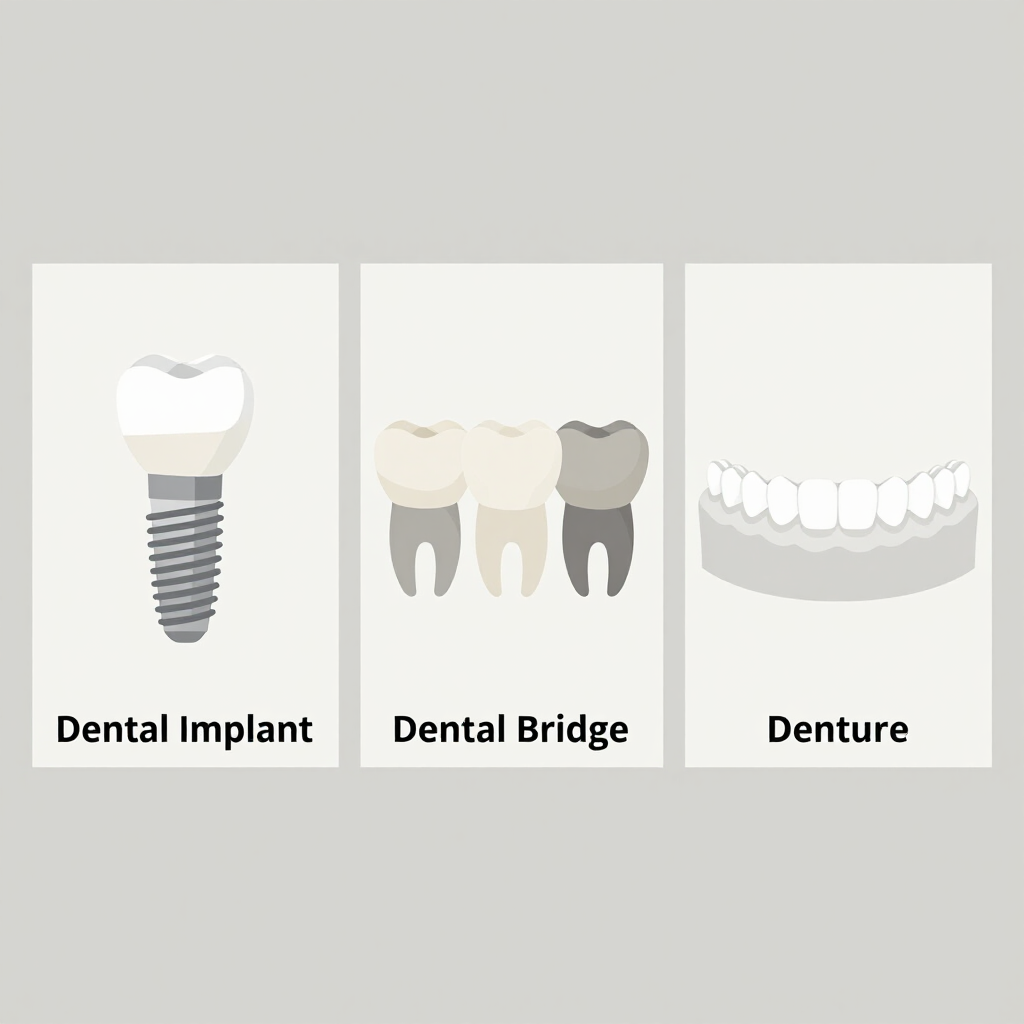
Losing a tooth—or several teeth—is one of the most common dental challenges adults face, and the decision about how to replace them has consequences that last decades. The three main options available to most patients are dental implants, fixed bridges, and dentures. Each works differently, costs differently, and feels differently in your mouth over time. Making the right choice requires understanding not just today’s price tag, but the full picture of long-term value, comfort, and oral health impact.
A Quick Overview of Each Option
Dental Implants
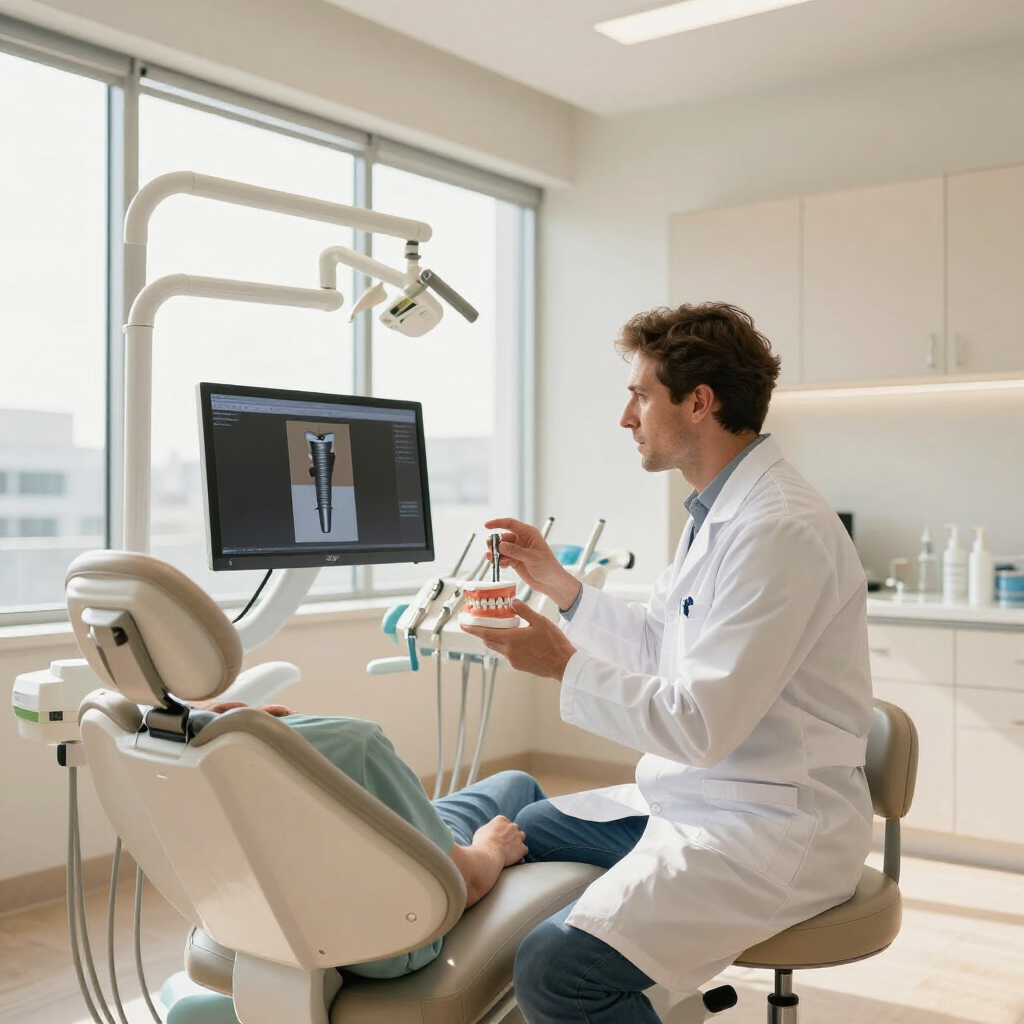
A dental implant is a titanium post surgically placed into the jawbone, acting as an artificial tooth root. After the implant integrates with the bone over several months, a custom crown, bridge, or full-arch restoration is attached on top. The result is a tooth replacement that looks, feels, and functions almost identically to a natural tooth.
Implants can replace:
- A single missing tooth (implant + crown).
- Multiple teeth (implant-supported bridge).
- An entire arch of teeth (full-arch implant solutions like All-on-4-style restorations).
Fixed Dental Bridges
A traditional bridge uses the two healthy teeth on either side of a gap as anchors. Those anchor teeth are permanently reshaped and crowned, with an artificial tooth (pontic) suspended between them to fill the space.
- Fixed in place—not removable.
- Completed without surgery in most cases.
- Dependent on the health of the adjacent anchor teeth.
Dentures
Dentures are removable appliances that replace either some teeth (partial dentures) or all teeth in an arch (full dentures). They rest on the gums and are held in place by suction, clasps, or adhesive.
- Non-surgical and relatively fast to complete.
- The most immediately affordable option upfront.
- Removable for cleaning and sleeping.
Comfort and Daily Function: How Each Option Feels
Implants: The Closest to Natural
Most implant patients report that their implant-supported teeth feel and function like natural teeth. Because the implant is anchored directly into bone:
- Biting force is transmitted into the jaw naturally, allowing most foods without restriction.
- There is no slipping, shifting, or movement when eating or speaking.
- No adhesive or removal is needed—care is the same as natural teeth.
For patients who previously wore dentures and switched to implants or implant-supported overdentures, the improvement in comfort and function is often described as life-changing.
Bridges: Fixed and Comfortable—With Limitations
A well-made fixed bridge feels stable and significantly more comfortable than dentures. However:
- Cleaning under the bridge requires floss threaders or special tools, as you cannot floss normally between the anchor teeth.
- The sensation of chewing may be slightly different from a natural tooth.
- Over time, the bone beneath the pontic (artificial tooth) will slowly resorb, as there is no root stimulating it.
Dentures: Functional but With Clear Trade-Offs
Traditional full dentures rest on the gums, which means:
- Chewing force is reduced significantly compared to natural teeth or implants.
- Many patients struggle with hard, sticky, or chewy foods.
- Dentures can shift or slip when speaking or eating, causing embarrassment and discomfort.
- Bone loss continues beneath the denture over time, eventually changing the fit and requiring relines or replacements.
Partial dentures are more stable than full dentures but still involve clasps on adjacent teeth that can feel bulky and may stress those teeth over time.
Long-Term Oral Health Impact
This is where the differences between options become most significant—and where the “cheapest upfront” option often becomes the most expensive over a lifetime.
Implants Preserve Bone
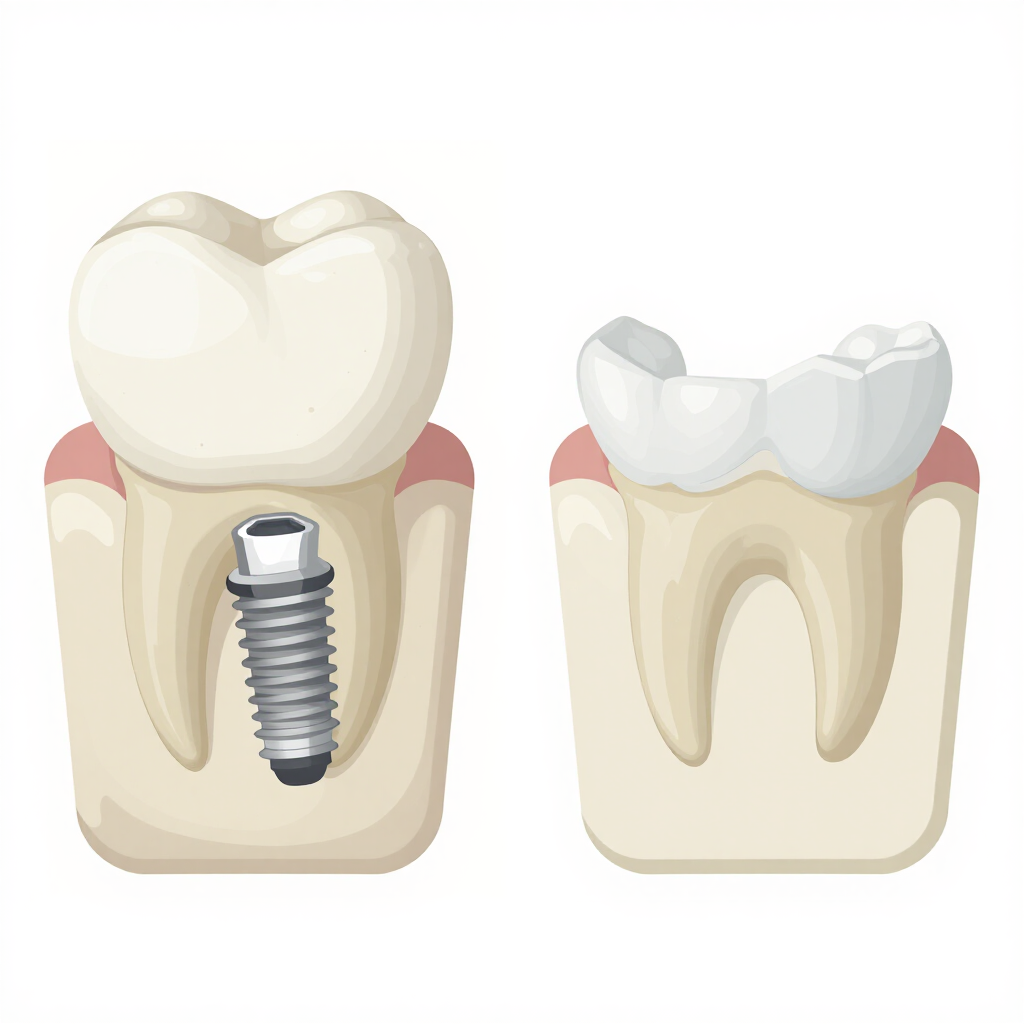
When a tooth root is present in the jaw, it stimulates bone through the forces of chewing. When a tooth is lost without replacement—or replaced with a bridge or denture that doesn’t have a root—the bone in that area begins to resorb (shrink).
Dental implants are the only tooth replacement option that replicates root stimulation and actively preserves jawbone volume. This matters because:
- Bone loss changes the shape of the face over time, contributing to a sunken or aged appearance.
- Significant bone loss makes future implant placement more difficult and expensive (often requiring grafts).
- Preserved bone supports adjacent teeth and overall facial structure long term.
Bridges Sacrifice Healthy Teeth
To support a bridge, the anchor teeth must be permanently reshaped—often removing a significant portion of healthy enamel and dentin. These teeth are then permanently crowned. This means:
- Two healthy teeth are permanently altered to replace one missing tooth.
- If either anchor tooth develops decay, a crack, or root problems, the entire bridge may fail.
- The long-term cost of maintaining or replacing a bridge—especially if anchor teeth have issues—can exceed the cost of an implant placed at the outset.
Dentures Accelerate Bone Loss
Because dentures rest on the gums with no root in the bone, they do nothing to prevent bone resorption—and in some cases, the pressure of the denture on the gums may accelerate it. Over years:
- The jaw ridge shrinks, making the denture fit increasingly poorly.
- Patients need periodic relines, adjustments, and eventually new dentures.
- Significant bone loss over decades can make a patient a more complex implant candidate later if they change their mind.
Long-Term Cost Comparison: What You Actually Pay Over Time
Upfront cost is only part of the story. Looking at a 15–20 year window tells a very different story.
Dental Implants (Single Tooth)
- U.S. cost: $3,000–$5,000 per implant with crown.
- Cartagena cost: approximately $900–$1,800 per implant with crown.
- Lifespan: Implants themselves can last decades or a lifetime with proper care; crowns may need replacement after 15–20 years.
- Long-term maintenance: Standard brushing, flossing, and cleanings—no special adhesives or relines needed.
Fixed Bridge (Three-Unit)
- U.S. cost: $3,000–$6,000 for a standard three-unit bridge.
- Cartagena cost: roughly $800–$2,000 depending on material and number of units.
- Lifespan: Typically 10–15 years before replacement may be needed.
- Long-term costs: Potential replacement bridges, treatment of anchor teeth if they develop problems, and eventual bone graft costs if implants are chosen later after bone loss has occurred.
Full Dentures (Per Arch)
- U.S. cost: $1,500–$4,000 per arch for a quality full denture.
- Cartagena cost: varies; typically significantly less for comparable quality.
- Lifespan: 5–8 years before significant reline or replacement is typically needed.
- Long-term costs: Multiple sets of dentures over a lifetime, periodic relines, adhesive costs, and potential future implant work if bone loss becomes severe.
When all costs are projected over 20 years, implants—especially when obtained in Cartagena at dental tourism prices—often represent the most cost-effective option per year of service, not the most expensive one.
Who Is Each Option Best For?
Implants Are Ideal For Patients Who:
- Have sufficient bone volume (or can undergo grafting) to support an implant.
- Are in generally good health and are non-smokers or willing to stop smoking.
- Want a long-term, low-maintenance solution that preserves bone.
- Are replacing one or more teeth and want the most natural result.
- Can commit to the timeline involved, including healing between stages.
Bridges May Be Better For Patients Who:
- Cannot undergo surgery due to health conditions.
- Have healthy, strong adjacent teeth suitable for crowns.
- Need a faster, non-surgical solution.
- Are on a tight timeline and cannot commit to a multi-stage implant process.
Dentures May Be Suitable For Patients Who:
- Are missing most or all teeth in an arch and need an immediate, affordable solution.
- Are not currently candidates for implants due to health or bone volume.
- Want a temporary solution while planning for implants later.
- Have budget constraints that make even Cartagena implant prices difficult.
How Cartagena Changes the Implant Decision for U.S. Patients
For many Americans, dental implants feel financially out of reach at U.S. prices. At $3,000–$5,000 per tooth, replacing four missing teeth costs $12,000–$20,000—before any grafts or additional work. That price point pushes many patients toward bridges or dentures not because those are the best clinical choice, but because they’re the only affordable one.
Cartagena changes that equation. At a quality clinic like Dr. Julio Oliver’s, implant treatment uses internationally recognized systems at a cost structure that makes comprehensive implant planning realistic for patients who assumed it was beyond their budget. Combined with a structured virtual pre-evaluation process and honest timeline planning, it means patients can finally choose based on what is best for their health—not just what is cheapest today.
✦ Still Weighing Your Options? Start With a Conversation—Not a Commitment ✦
The best tooth replacement decision is the one made with complete information, honest costs, and a clear understanding of what each option means for your long-term health.
Dr. Julio Oliver’s clinic in Cartagena helps U.S. and Canadian patients evaluate implants, bridges, and restorative options through a free virtual pre-evaluation—before any travel decisions are made.
Here is how to begin:
- Gather any recent X-rays or dental records you have.
- Take a clear set of dental photos using our simple home photo guide.
- Send them in with a short note about which teeth you are missing and what your goals are.
You will receive a personalized recommendation, honest timeline, and written cost estimate from Dr. Julio—so you can make the best decision for your smile, your health, and your budget.
Because the right choice is the one that serves you for the next 20 years—not just the next 20 days.